Why Tax Calculation Order Matters
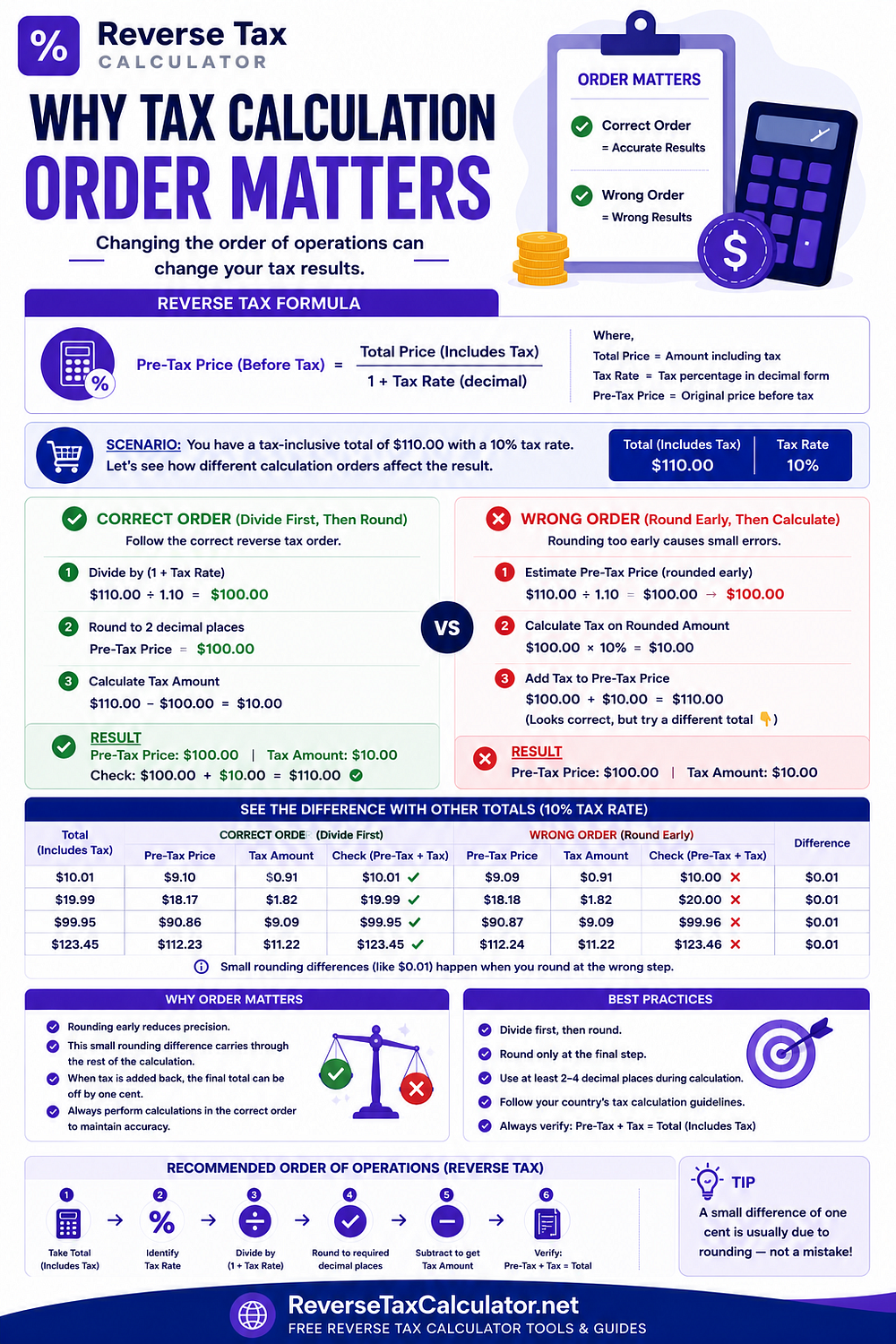
Why Tax Calculation Order Matters
Most reverse tax mistakes are not caused by using the wrong formula.
They're caused by performing the correct calculation in the wrong order.
Many people immediately divide a total by the tax multiplier without first checking what that total actually contains. If the amount includes discounts, shipping, tips, exempt items, or multiple tax rates, the calculation sequence matters just as much as the formula itself.
For a complete breakdown with more scenarios, read the full Why Tax Calculation Order Matters guide.
Why Order Matters
Reverse tax works best when the amount represents one taxable total with one known tax rate.
Before removing tax, ask yourself:
Does the amount already include tax?
Is there only one tax rate?
Are there exempt items?
Were discounts applied before tax?
Does shipping affect the taxable amount?
Is the receipt already showing the tax separately?
Answering these questions first prevents incorrect calculations later.
A Simple Example
Suppose a customer pays $216.00, including 8% tax.
If nothing else affects the transaction:
Pre-tax amount = $216 ÷ 1.08
Tax amount = Total − Pre-tax amount
This follows the proper calculation sequence.
However, imagine the same receipt also includes:
A non-taxable shipping charge
An exempt product
A store discount
Two different tax rates
Now dividing the full total by 1.08 would no longer produce an accurate answer.
Common Situations That Change the Order
The calculation order becomes more important when working with:
Coupons
Discounts
Refunds
Returns
Shipping charges
Tips
Marketplace fees
Mixed taxable and exempt products
Multiple tax rates
These situations usually require separating the transaction before applying the reverse tax formula.
Why Businesses Should Follow One Process
Whether you use Excel, accounting software, or an online calculator, consistency matters.
A repeatable workflow helps:
Reduce errors
Improve reconciliation
Match receipt totals
Avoid unnecessary rounding differences
Using the same calculation order across all transactions makes financial records easier to audit.
Calculate Reverse Tax More Easily
If you've already confirmed the correct taxable amount and tax rate, use the free Reverse Tax Calculator to instantly calculate:
Price before tax
Included tax
Tax-inclusive total
Calculation breakdown
If you'd like to understand why calculation sequence affects the result, read the complete article on Why Tax Calculation Order Matters.
This article was originally published on Reverse Tax Calculator.
Comments
Post a Comment